
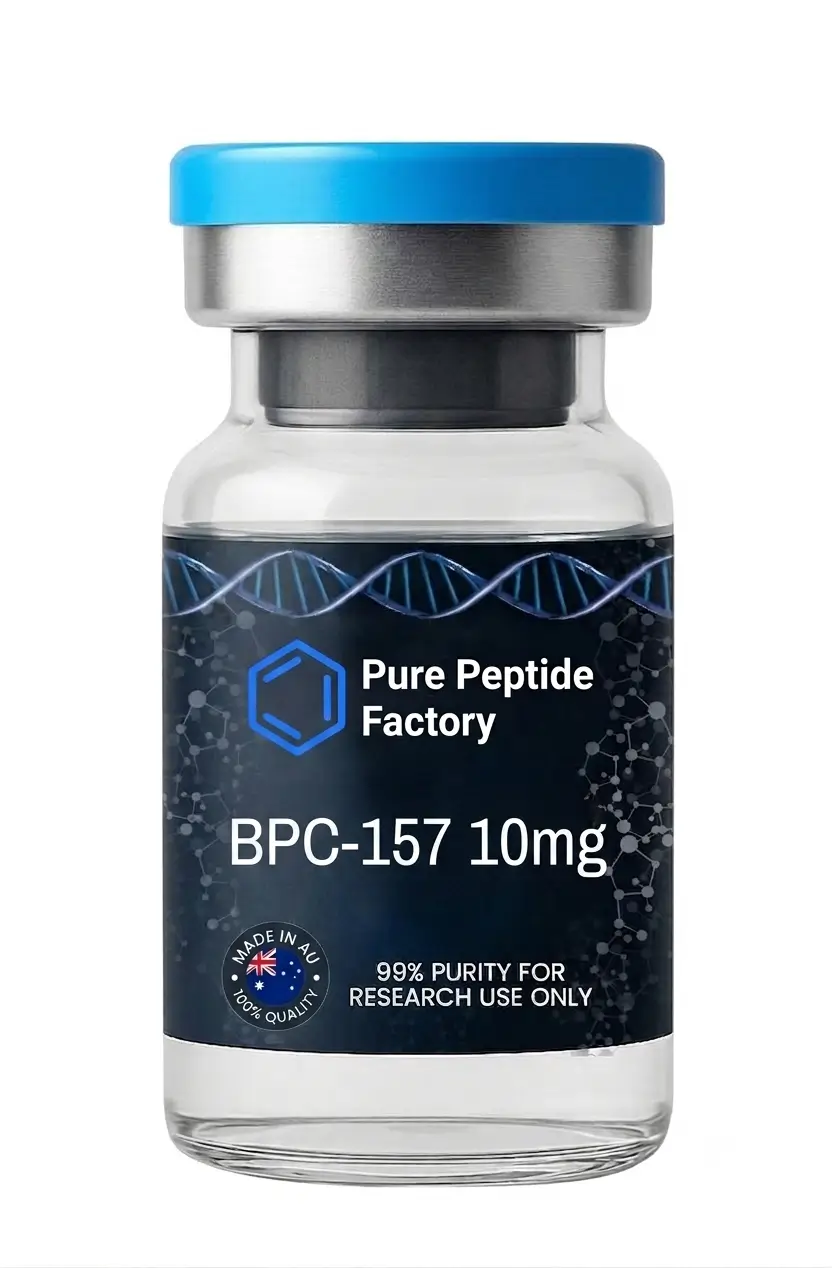
BPC-157
Price range: $25.00 through $58.00
Bpc-157 australia research-grade peptide for laboratory applications. Available in 5mg lyophilised vials with HPLC-verified purity. Minimum order $200 AUD with domestic shipping. Not for human consumption.
Bpc-157 Australia Research and Mechanism
Bpc-157 australia is a synthetic 15-amino-acid pentadecapeptide originally derived from human gastric juice. According to narrative review data published in PMC, bpc-157 activates VEGFR2 and nitric oxide synthesis via the Akt-eNOS axis, promoting angiogenesis, fibroblast activity and neuromuscular stabilization.citeweb_search:21#0 It also engages ERK1/2 signalling, facilitates endothelial and muscle repair, and exerts anti-inflammatory effects across multiple tissue types. A study in PMC demonstrated that bpc-157 dose- and time-dependently increases growth hormone receptor expression in tendon fibroblasts, enhancing proliferation and collagen synthesis.citeweb_search:21#1
Research published in Pharmaceuticals documents that bpc-157 has been studied for protective effects against NSAID-induced gastric lesions, alcohol-induced liver damage, and various wound healing models.citeweb_search:21#4 It is critical to emphasise that bpc-157 is not approved by the TGA for human use in Australia. According to Healthy Male, bpc-157 is a Schedule 4 prescription-only medicine and is prohibited by WADA. It is illegal to possess without a valid prescription.citeweb_search:21#5 It is sold strictly for in vitro and laboratory research use only.
Bpc-157 Australia Regulatory Status
Bpc-157 australia is not listed on the Australian Register of Therapeutic Goods (ARTG) and has no TGA approval for therapeutic use. According to Healthy Male, when sold online bpc-157 is often described as experimental or for research only, but it is a Schedule 4 prescription-only medicine in Australia making it illegal to possess without a valid prescription.citeweb_search:21#5 It is also banned by the World Anti-Doping Agency (WADA). Pure Peptide Factory supplies bpc-157 as a research reference material for analytical, assay development, and comparative biology studies only. Any supply for human use would require appropriate TGA approval, medical licensing, and valid prescription.
Bpc-157 Dosage and Reconstitution
Bpc-157 Dosage for Research Protocols
For laboratory research, bpc-157 is typically supplied as a 5mg lyophilised powder. According to research protocol references, typical laboratory dosing ranges from 1 to 10 micrograms per kg in preclinical models, with administration once or twice daily depending on the research context.citeweb_search:21#1 For in vitro applications, working concentrations of 0.1 to 10 micromolar are common reference points for studying angiogenesis, fibroblast proliferation, and collagen synthesis. A Phase I clinical trial (NCT02637284) evaluated intravenous bpc-157 up to 20mg in healthy volunteers and reported no adverse events.citeweb_search:21#9 Gently swirl the vial until fully dissolved. Do not shake vigorously. Allow the solution to settle at room temperature before aliquoting.
Reconstitution Guide
Remove the vial from freezer storage and allow it to equilibrate to room temperature for 15 to 20 minutes. Draw 2.0 to 3.0 mL of bacteriostatic water into a sterile syringe and inject slowly down the inner vial wall to minimise foaming. Gently swirl until fully dissolved. Label with the reconstitution date and store at 2 to 8 degrees C protected from light. Use within 14 to 21 days. Do not freeze reconstituted solution.
Bpc-157 Side Effects in Research Literature
According to Moonshot Medical, bpc-157 has a favourable safety profile in published research with no serious adverse events reported across 100 plus studies.citeweb_search:21#1 Common effects include injection site redness or irritation. Less common effects include nausea, dizziness, or headache. However, Healthy Male notes that the biggest drawback is the lack of human safety evidence, with risks including pain and swelling at injection sites, infection, or allergic reaction.citeweb_search:21#5 Products sold online may have inaccurate doses, contaminants, or different ingredients than labelled. Pharmaceuticals research also raises concerns about potential metabolite toxicity, including proline oxidation and superoxide formation.citeweb_search:21#4 These safety profiles are documented for research reference only and do not constitute medical guidance.
Bpc-157 Benefits in Preclinical Research
According to PMC narrative review data, bpc-157 benefits in preclinical models include accelerated tendon and ligament healing, improved muscle repair, enhanced wound closure, reduced NSAID-induced gastric damage, and neuroprotective effects.citeweb_search:21#0 The peptide demonstrates cytoprotective properties, upregulates VEGF for angiogenesis, modulates nitric oxide signalling, and activates the FAK-paxillin pathway for cell migration. However, McGill University emphasises that human data is exceedingly sparse, with only three published human studies, all small and lacking proper controls.citeweb_search:21#12 The FDA and WADA have restricted bpc-157 citing concerns about unregulated use and unknown human toxicity profiles. These findings are for research reference only.
How Bpc-157 Compares to Other Research Compounds
Bpc-157 vs TB-500
TB-500 is a synthetic fragment of thymosin beta-4 studied for cell migration, actin regulation and tissue repair. Bpc-157 is a gastric pentapeptide studied for angiogenesis, growth factor modulation and cytoprotection. TB-500 regulates actin dynamics to facilitate cellular migration, while bpc-157 activates VEGF and nitric oxide pathways to drive vascularisation. TB-500 is typically investigated for musculoskeletal recovery and wound healing speed, while bpc-157 is investigated for broader tissue protection including gut, tendon, and neurological applications. For combined regeneration research, both compounds may be studied together.
Bpc-157 vs Glow Blend
Glow blend contains bpc-157 as one of three components alongside TB-500 and GHK-Cu in a 5:1:1 ratio. Bpc-157 as an individual product provides pure, unmixed material for researchers who want to study the gastric pentapeptide in isolation or who need to control exact concentrations. For integrated regeneration research, glow blend offers convenience. For isolated bpc-157 mechanism studies, the individual bpc-157 vial is preferable.
Bpc-157 vs BPC-157 TB-500
BPC-157 TB-500 is a dual-peptide stack combining bpc-157 and TB-500 in a single vial for synergistic regeneration research. Bpc-157 as an individual product allows independent dosing and batch tracking. BPC-157 TB-500 is designed for researchers studying combined angiogenesis and cell migration effects. Bpc-157 alone is for researchers requiring isolated pentapeptide analysis.
Bpc-157 vs 5 Amino 1mq
5 amino 1mq is a small molecule NNMT inhibitor studied for metabolic regulation through NAD+ and SIRT1 pathways. Bpc-157 is a peptide-based tissue repair compound targeting angiogenesis and cytoprotection. 5 amino 1mq addresses cellular energy balance; bpc-157 addresses tissue regeneration. They are not interchangeable research compounds.
Bpc-157 vs AOD-9604
AOD-9604 is a modified HGH fragment studied for direct lipolysis via beta-3 adrenergic receptor pathways. Bpc-157 is a gastric pentapeptide with no lipolytic mechanism. AOD-9604 is positioned for fat metabolism research, while bpc-157 is positioned for tissue repair and regeneration. They are entirely different research compounds.
Bpc-157 vs MOTS-c
MOTS-c is a mitochondrial-derived peptide that activates AMPK and regulates cellular energy homeostasis. Bpc-157 is a gastric pentapeptide that promotes angiogenesis and tissue repair. MOTS-c is studied for metabolic adaptation, while bpc-157 is studied for structural regeneration. These are complementary but non-overlapping research categories.
Bpc-157 vs Hgh Fragment 176 191
Hgh fragment 176 191 is a peptide fragment targeting the lipolytic domain of human growth hormone, studied for fat metabolism. Bpc-157 is a gastric pentapeptide with no structural relationship to growth hormone. Hgh fragment 176 191 is investigated for subcutaneous fat reduction, while bpc-157 is investigated for tissue repair and cytoprotection. They are entirely different research tools.
Bpc-157 Capsules vs Vials for Research
Some suppliers offer bpc-157 capsules for oral administration research. Pure Peptide Factory supplies bpc-157 as a lyophilised powder in sterile vials for reconstitution. The vial format allows precise concentration control, sterile handling, and flexible dosing protocols for in vitro and analytical applications. Capsules may be suitable for oral bioavailability studies but lack the precision and sterility required for cell culture, assay development, and injectable protocol research. For laboratory research requiring exact dosing and sterile conditions, the lyophilised vial format is the standard analytical tool.
Product Specifications
Purity and Analysis
- Content: 5mg lyophilised powder
- Sequence: Gly-Glu-Pro-Pro-Pro-Gly-Lys-Pro-Ala-Asp-Asp-Ala-Gly-Leu-Val
- Chemical Name: Body Protection Compound-157
- Synonyms: PLD-116, PL-10, PL14736, Bepectin
- Molecular Formula: C62H98N16O22
- Molecular Weight: 1419.5 g/mol
- Purity: Greater than or equal to 98% by HPLC
- Appearance: White to off-white lyophilised powder
- Source: Synthetic, manufactured via solid-phase peptide synthesis
Each batch is independently tested. Request the Certificate of Analysis (COA) for your specific batch number to verify purity, mass spec, and chromatography data.
Storage and Handling
- Lyophilised storage: -20 degrees C, protected from light and moisture
- Shelf life (unreconstituted): 24 months when stored correctly
- Handling: Use sterile technique. Avoid repeated freeze-thaw cycles
Shipping and Returns
We ship bpc-157 australia from our Australian facility via express domestic courier. Orders placed before 2:00 PM AEST dispatch the same business day. All peptide orders are packaged in insulated, discreet packaging with cold-chain protection where required.
- Minimum order: $200 AUD
- Free shipping: Orders over $200 AUD
- Flat rate: $15 AUD for orders under $200
- Delivery time: 1 to 5 business days Australia-wide
- Returns: Unopened vials may be returned within 30 days of delivery for store credit or replacement. We do not accept returns on reconstituted or opened products due to stability concerns. Read the full returns policy.
Frequently Asked Questions
Bpc-157 australia what is it
Bpc-157 australia refers to research-grade Body Protection Compound-157 supplied by Pure Peptide Factory for laboratory applications. It is a synthetic 15-amino-acid peptide originally derived from human gastric juice, studied for tissue repair and cytoprotective mechanisms.
Bpc 157 peptide for research
Pure Peptide Factory supplies bpc 157 peptide as a 5mg lyophilised vial for laboratory research. Each batch is HPLC verified and ships with a Certificate of Analysis. Minimum order $200 AUD.
Bpc-157 chemist warehouse
Bpc-157 is not available at Chemist Warehouse or any Australian pharmacy. It is not TGA-approved and is Schedule 4 prescription-only. Pure Peptide Factory supplies bpc-157 for research purposes only.
Bpc 157 dosage for research
Preclinical models typically use 1 to 10 micrograms per kg. In vitro cell culture work commonly uses 0.1 to 10 micromolar. A Phase I trial used up to 20mg intravenously with no adverse events. All dosing is for laboratory research only.
Bpc 157 benefits in research
Preclinical studies document angiogenesis promotion, fibroblast activation, collagen synthesis, VEGF upregulation, nitric oxide modulation, and cytoprotective effects. Human data is extremely limited.
Bpc 157 side effects
Animal studies show a favourable safety profile. Potential risks include injection site reactions, nausea, dizziness, and unknown long-term effects. Products from unregulated sources may contain contaminants. This data is for research reference only.
Bpc 157 capsules vs vials
Pure Peptide Factory supplies bpc-157 in lyophilised vials for precise, sterile research protocols. Capsules may be available elsewhere for oral bioavailability studies but lack the precision required for analytical work.
Is bpc-157 approved for human use in Australia
No. Bpc-157 is not TGA-approved and is Schedule 4 prescription-only. It is also banned by WADA. It is strictly for research and laboratory use.
Do you ship outside Australia
Currently, we only ship to Australian addresses. We do not export peptides due to varying international customs regulations.
How do I verify the purity of my batch
Every batch ships with a unique batch number. Enter this number on our COA lookup page to download the HPLC and mass spec report for your specific vial.
| Dosage | 2mg, 5mg, 10mg |
|---|
Related products
-
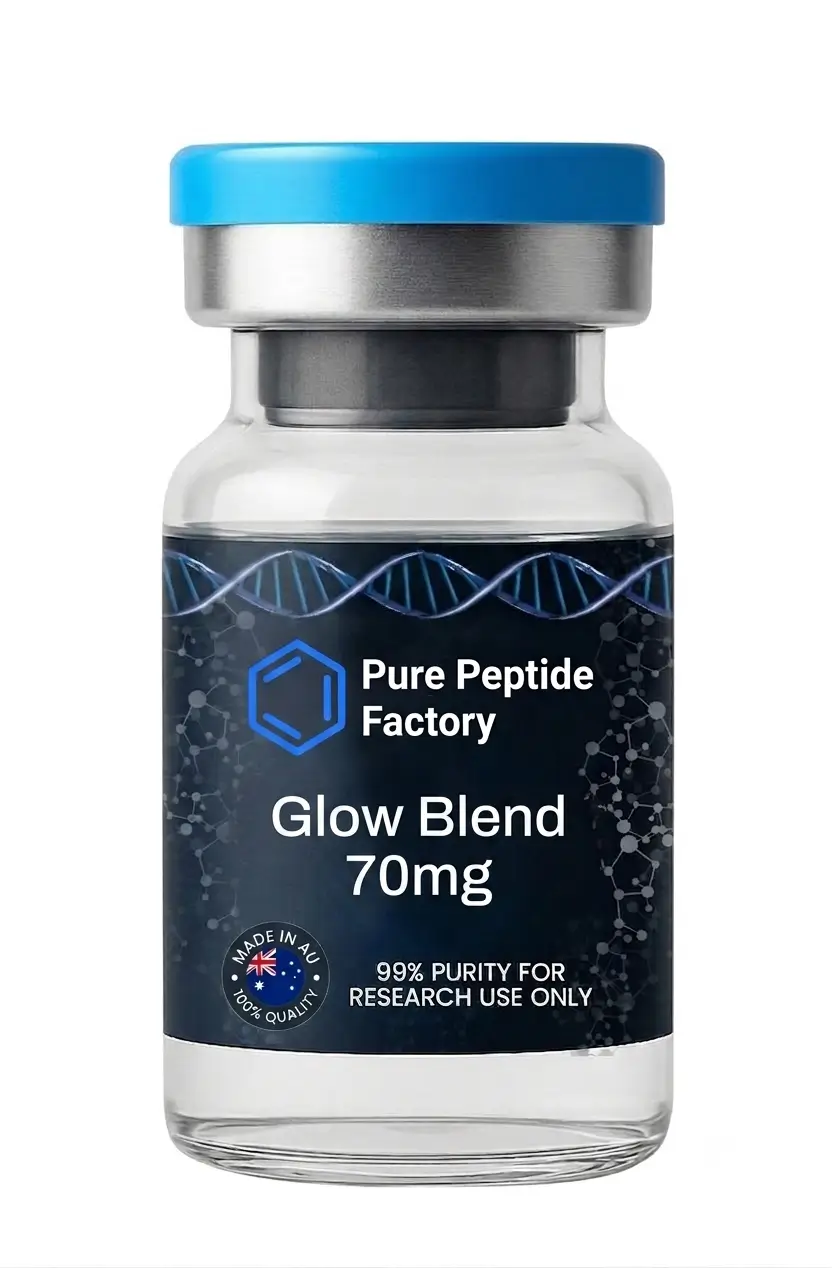
Glow Blend 70mg
Original price was: $168.00.$158.00Current price is: $158.00.
Reviews
There are no reviews yet.